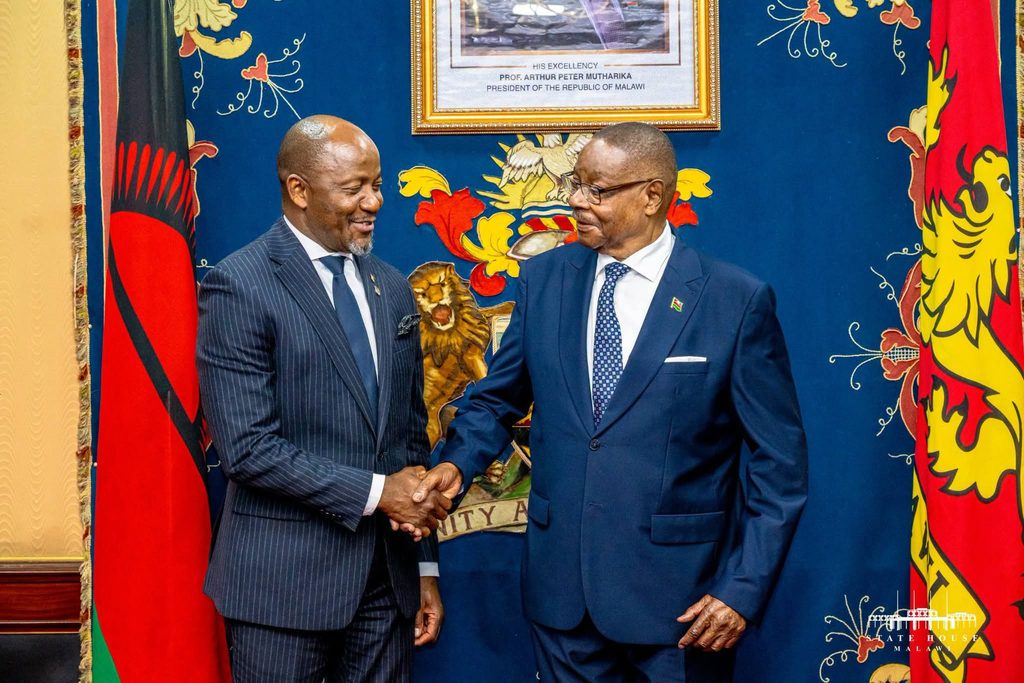
Opposition party UTM president Dalitso Kabambe has questioned optimism over the country’s economic recovery, arguing that some cited indicators do not reflect the economic pressures facing households and businesses.
The former Reserve Bank Governor made the remarks in a Facebook post. It followed a meeting between President Peter Mutharika and the Bankers Association of Malawi (BAM) in Lilongwe on Friday.
BAM president Philip Madinga said after the meeting that the economy was moving in the right direction, citing a decline in inflation from 28.2 percent in August 2025 to 20 percent in August this year.
He also pointed to a reduction in the interest rate from 26 percent to 24 percent over the same period as evidence of progress.
But Kabambe said the picture was more complicated, particularly when inflationary pressures beyond food prices and the foreign exchange situation were taken into account.
He argued that the decline in food inflation should not be treated as a lasting indication of economic recovery because food prices are affected by seasonal factors and could rise again as the lean period approaches.
Kabambe also pointed to what he described as rising core inflation, saying it had increased from about 24 percent in September last year to 33 percent currently.
“Praising low-interest rates when depositors are losing value on their savings is a disservice to ordinary citizens.
“When interest rates fall below core inflation, the real value of savings declines over time—an insult to those who rely on deposits for their livelihood,” he said.
The former Central Bank governor said persistent core inflation continued to erode purchasing power and increase costs for households and businesses.
Kabambe also questioned the significance of lower interest rates where returns on deposits remain below inflation.
He said savers could lose value in real terms when the interest earned on their deposits fails to keep pace with inflation.
The UTM leader also raised concerns over the country’s foreign exchange shortages, saying banks were currently able to provide individual customers with a maximum of US$200.
“This paltry figure is a slap in the face to entrepreneurs and business owners who rely on access to foreign currency for their operations. The limited disbursement has effectively crushed many businesses, stifling economic activity and growth,” he said.
Kabambe further claimed that banks were sitting on Letters of Credit obligations that they could not liquidate.
He questioned the extent to which commercial banks could finance critical sectors of the economy under the current conditions.
“Banks do not have money of their own; they hold deposits from their customers,” Kabambe said.
Further, he pointed out that while banks had a role to play in economic recovery, their commercial interests and responsibility to shareholders could limit their willingness to take on risks in an unstable economic environment.
Kabambe also raised concerns over government borrowing, arguing that high borrowing costs could crowd out productive investment and make economic recovery more difficult.